Running Toward the Unknown
Big changes feel like stepping onto a trail you’ve never run: you see a few yards ahead, then the path bends out of sight. Søren Kierkegaard warned that “life can only be understood backwards; but it must be lived forwards.” You move first. Meaning resolves in hindsight. This is the fundamental problem of nontrivial change: information arrives after commitment, and your choices change the system you’re trying to evaluate. I try to minimize one-way doors, maximize reversibility, prefer short feedback loops to long bets. Call it Bayesian life planning. Managing uncertainty isn’t just about decision architecture, it’s about learning to trust yourself. The unease at the starting line isn’t fear; it’s a signal. Kierkegaard called anxiety “the dizziness of freedom”: that pit-of-stomach sensation when the old route ends and the trail ahead is yours to forge. If everything were predetermined, you’d be on autopilot. Feeling unsteady is evidence your future remains shapeable; possibility still has nonzero measure. I treat identity as an evolution, not an endpoint.
In systems terms, the self isn’t a fixed baseline but an OPSCON under continuous refinement: retire obsolete requirements and field new capabilities that fit the environment. I try to calibrate my scoreboard by what I control (attention, effort, integrity) not external noise. Let ambition be a function of agency: optimize the variables you own; hold the rest lightly. But operational discipline only gets you to the trailhead.
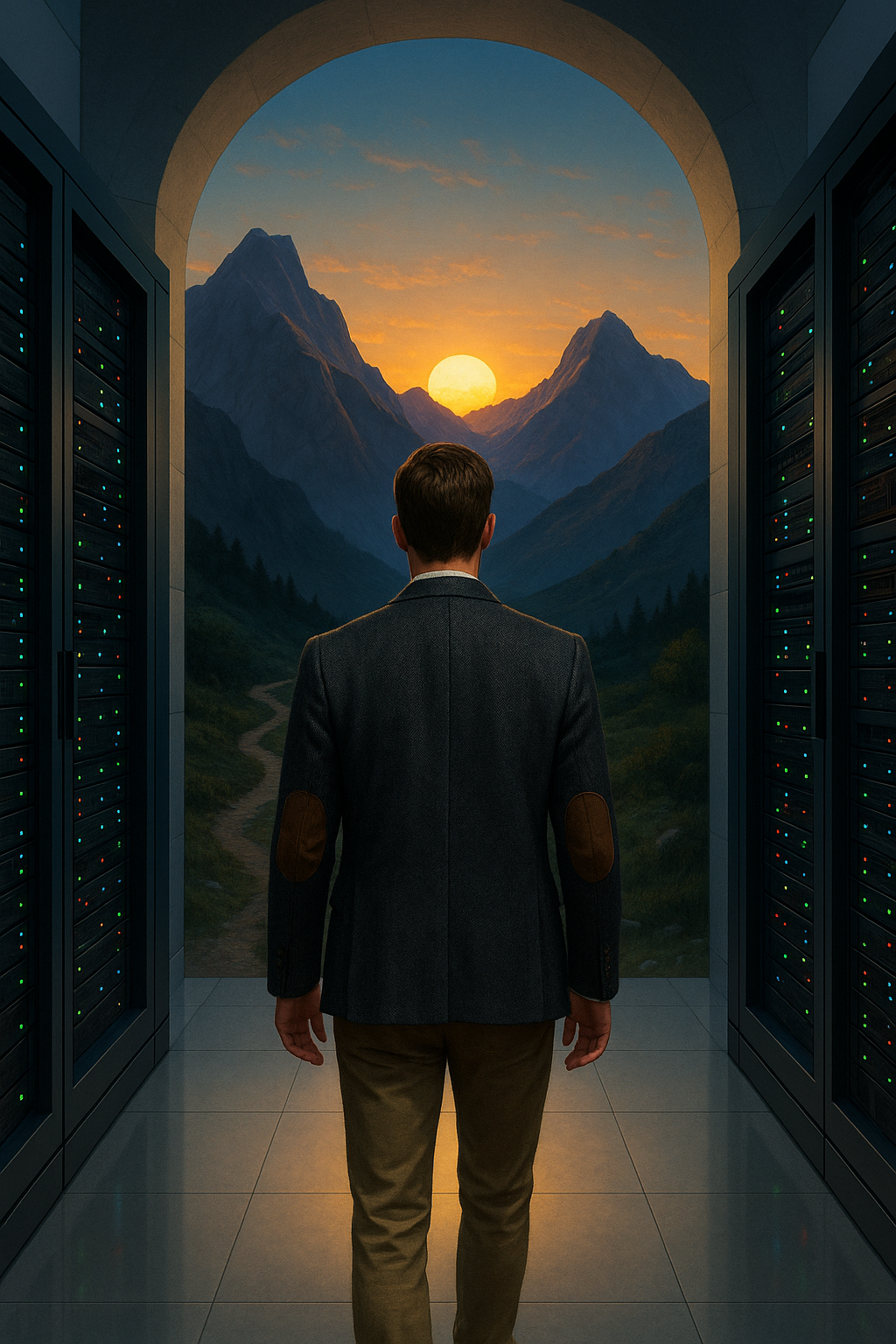
Actually running requires something else: the willingness to say no to what no longer serves you, and yes to what does. Nietzsche sketches this as three metamorphoses. First comes the camel, learning to bear chosen burdens (discipline, constraint, duty) until strength is internalized. Then, in the desert, the spirit meets the dragon of ‘Thou-shalt,’ the collection of inherited commandments, and becomes a lion. The lion doesn’t invent new values but wins the ground on which creation could happen: “To create freedom for oneself,. . . for that, my brethren, the lion is needed.” Only after this can the child arrive: the third metamorphosis, with its light, experimental ‘Yes’ that creates freedom. In other words: carry what must be carried (camel), say no to what no longer fits the terrain (lion), then freely choose your path forward (child). Bayesian planning gives you the method; the three metamorphoses name the lived sequence that makes the method human. The work may sound simple but can be hard to live: carry what strengthens you, drop what slows you, and keep saying yes to the life ahead. Each step updates the model; each update makes the next step clearer. Change is coming either way. You might as well lace up and run toward the unknown.